
Strangely enough, my YouTube feed sends me a lot of weight loss videos. This morning I watched one that was low-production and authentic (becoming a rarity these days) and this lady lost 55lbs in 6 months using a ocmbination of low carb eating along with intermittent fasting.
I thought it would be a great idea to develop a detailed map of how to implement a low-carb diet using 16/8 fasting to lose weight and become healthier. If you want to know what foods are best to eat to achieve that using low-carb eating, and how to best combine those with IF, then follow along. There’s also a brief introduction on why this method works. Let’s go …
Implementing a low-carb diet alongside a 16/8 Intermittent Fasting schedule is one of the most effective ways to accelerate weight loss and improve metabolic health. (We all know there is no ONE way to lose weight -different methods work for different people. Maybe this is the plan for you). By combining Low Carb and Intermittent Fasting, you aren’t just cutting calories; you are fundamentally changing how your body fuels itself.
Why This Method Works
Normally, your body burns glucose (sugar) from carbohydrates for energy. When you restrict carbs and stop eating for 16 hours, your insulin levels drop significantly. Since insulin is your “fat-storage hormone,” low levels signal your body to stop storing fat and start burning its own reserves. This metabolic state is known as ketosis. The 16-hour fast “empties the tank” of sugar, and the low-carb meals ensure the tank doesn’t get refilled with quick-burning glucose, keeping you in a fat-burning state all day.
1. The 16/8 Fasting Map
The “16/8” means you fast for 16 hours and eat all your daily food within an 8-hour window.
- The Schedule: Most people find it easiest to skip breakfast – that’s what I’ve been doing and I dont miss it.
- 12:00 PM: First Meal (Break-fast)
- 3:30 PM: Optional Snack
- 8:00 PM: Final Meal (Finish eating – that means ‘the kitchen is closed!’ If it’s too big a temptation, move yourself as far away from food sources as possible after 8pm, and clean your teeth – nothing tastes good with residual toothpaste in your mouth 😊 )
- During the Fast (The 16 hours): You can drink water, plain black coffee, or plain tea. No milk, no sugar, and no “diet” drinks (Diet coke, I’m looking at you)- anything that tastes sweet can trigger an insulin response and stall your progress.
2. Low-Carb Food Guide
In Australia, we have access to high-quality grass-fed meats and fresh produce. Focus on these staples:
| Category | What to Eat (The “Green List”) | What to Avoid (The “Red List”) |
| Proteins | Grass-fed beef, lamb (cutlets/chops), kangaroo (very lean), eggs, salmon, barramundi, chicken (skin on). | Breaded/crumbed meats, deli meats with added sugar/honey. Avoid anything pre-packaged – fresh is best. |
| Vegetables | Spinach, kale, bok choy, broccoli, cauliflower, zucchini, asparagus, mushrooms. | Potatoes, sweet potatoes, corn, pumpkin (in large amounts), carrots. Use sparingly, if at all. |
| Fats | Avocado, Extra Virgin Olive Oil, grass-fed butter, macadamia oil, coconut oil. | Margarine, canola oil, “vegetable” oils, soybean oil. Don’t keep them at home. |
| Dairy | Full-fat Greek yoghurt (e.g., Chobani Fit or Jalna), hard cheeses (Cheddar, Brie, Feta). | Skim milk, sweetened fruit yoghurts, oat milk (high carb). |
| Snacks/Fruit | Macadamias, walnuts, almonds, blueberries, strawberries, raspberries. | Bananas, grapes, mangoes, tropical fruits, crackers, chips, cakes, pastries, lollies, chocolate, ice cream. |
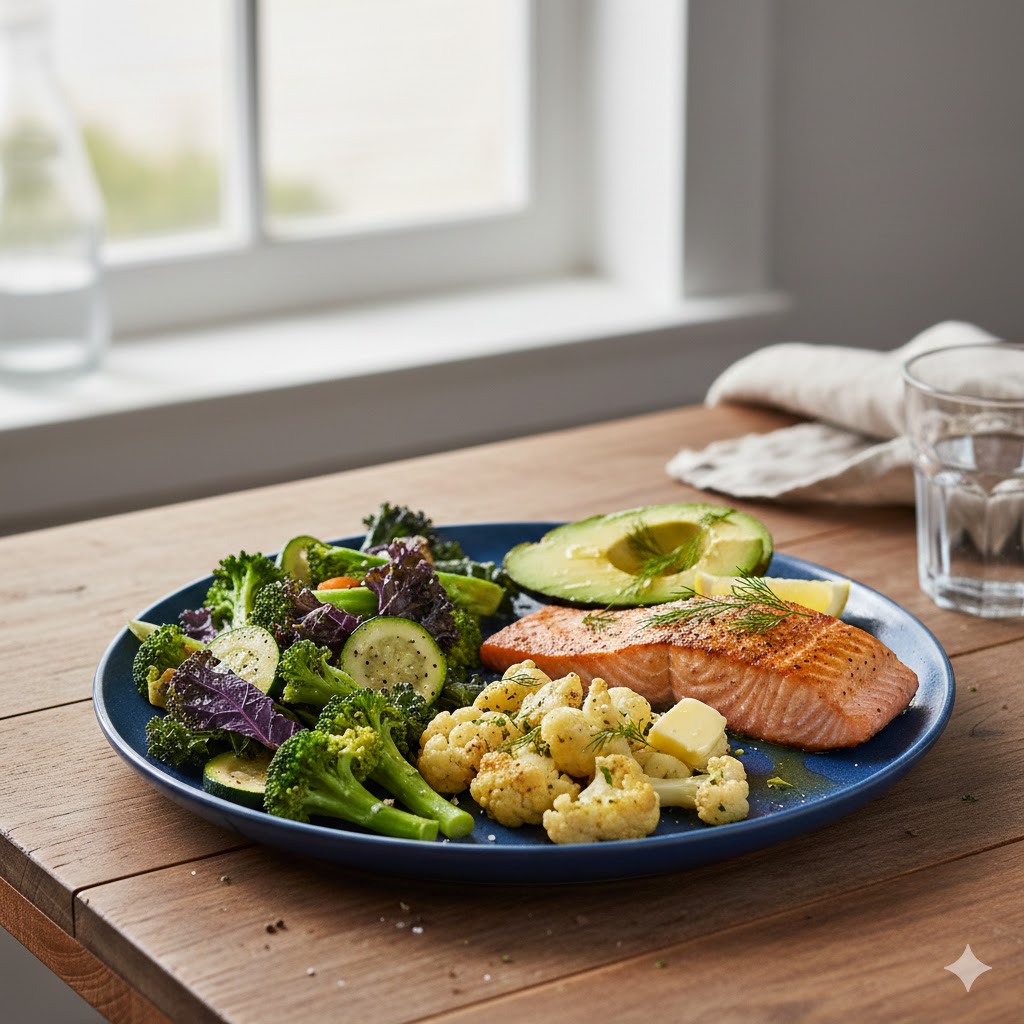
3. How to Combine Them: The “Plate Method”
When you eat your two main meals, follow this visual guide to ensure you stay low-carb and satisfied:
- 50% of the plate: Non-starchy vegetables (Greens, broccoli, cauliflower).
- 25% of the plate: High-quality protein (The size of your palm).
- The “Fat Topper”: Add 1–2 tablespoons of healthy fat (Half an avocado, a splash of olive oil, or a knob of butter) to keep you full until the next window.
Daily Menu Idea
- 12:00 PM (First Meal): 3-egg omelette with baby spinach, feta, and mushrooms, cooked in butter. Served with a side of avocado.
- 3:30 PM (Optional Snack): A small handful of Australian macadamias and a few raspberries.
- 7:30 PM (Final Meal): Grilled Atlantic salmon or a grass-fed steak with a large serving of “cauli-mash” (steamed cauliflower blended with butter and salt) and sautéed broccolini.
4. Practical Tips for Success
- Stay Hydrated: Fasting can act as a natural diuretic. Drink plenty of water and add a pinch of Himalayan salt to your water if you feel a headache coming on (the “Keto Flu”).
- Read Labels: In Australian supermarkets (Coles/Woolies), look at the “Carbohydrates – Total” on the back of packs. Aim for foods with less than 5g of carbs per 100g.
- Don’t Fear Fat: Since you aren’t eating carbs for energy, you must eat enough healthy fat to feel satisfied, or you will find the 16-hour fast too difficult.
7-day shopping list
Here you go – buy these, and you’ll have plenty of food to mix and match to last you through your initial weight loss phase. After that, you can gently and slowly add things like below-ground vegetables, but limit that quantity.
- Grass-fed beef or lamb chops
- Kangaroo fillets or chicken thighs (skin on)
- Atlantic salmon or Barramundi fillets
- Eggs (Large)
- Bacon (sugar-free) or Chorizo
- Avocados
- Fresh spinach and kale
- Broccoli and Broccolini
- Cauliflower (for mash or rice)
- Zucchini and Asparagus
- Mushrooms and Garlic
- Blueberries or Raspberries
- Macadamias, Walnuts, or Almonds
- Full-fat Greek yoghurt (unsweetened)
- Block of Sharp Cheddar or Brie
- Grass-fed butter
- Extra Virgin Olive Oil
Remember, this plan isn’t a ‘quick fix’ – it’s a metabolic reset.
Some days will be easier than others, especially when the smell of fresh sourdough hits you at the local bakery (do NOT go into the bakery – walk past it!). By prioritising high-quality proteins and healthy fats, you aren’t just losing weight; you’re giving your body the steady, reliable energy it deserves.
Ready to begin?
Transitioning to a 16/8 low-carb lifestyle isn’t about perfection; it’s about consistency.
Start by pushing your breakfast back by just one hour tomorrow. You’ll be surprised at how quickly your body adapts to burning fat for fuel.
Listen to your hunger, stay hydrated, and enjoy the process.
Remember: The best time to start was yesterday; the second best time is your next meal. Your body was built to burn fat; it’s time to give it the chance. Start now.
What’s the very first thing you will do to start on your low-carb journey?