
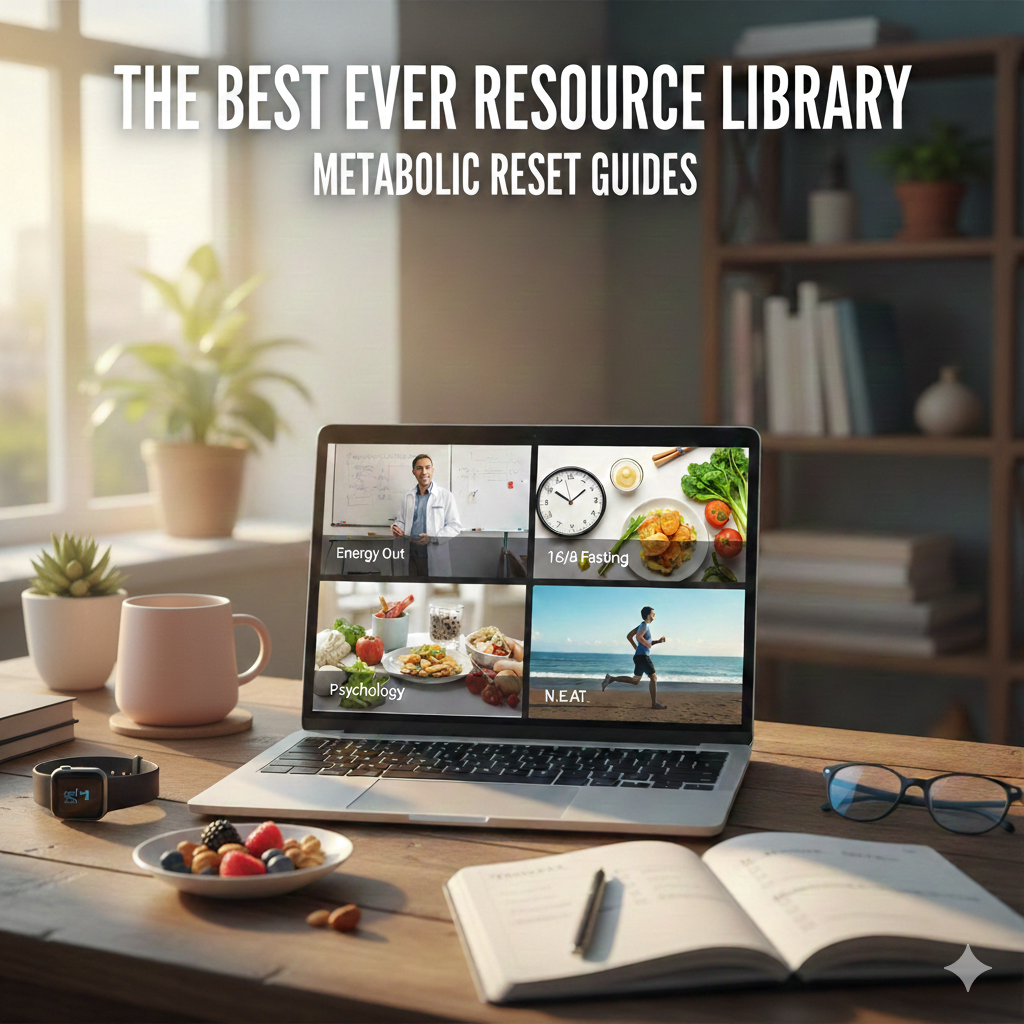
We’ve curated a range of resources to help you navigate the science of sustainable weight loss.
Pillar 1: Mastering “Energy Out” (Metabolic Fundamentals)
We advocate that Energy Out > Energy In is the primary driver of success. These videos explain how to maximise that output without spending hours at the gym. Follow these scientific principles and see results.
How to Calculate Your Calorie Deficit (Myprotein): A perfect starting point for you. It simplifies the math behind the “Energy In” part of the equation.
Why Watch? Most people overcomplicate weight loss. This video cuts through the noise to show you how to calculate your “Energy In” so you can finally focus on your “Energy Out.” Use this as your baseline for the next 3 weeks
Quick Find
01:56 – How to calculate your Basal Metabolic Rate (BMR).
02:31 – Determining your “Activity Factor” to account for daily movement.
03:47 – Why monitoring weight is more accurate than any online calculator.
04:54 – Why you should weigh yourself daily to get a weekly average
Best Ever Takeaway: Don’t get stuck in “analysis paralysis” with calculators. Pick a starting number, track your progress for two weeks, and adjust based on the scale—not the app.
The Power of N.E.A.T. (Dr. Frank O’Neill): This aligns with our focus on activity. It explains how non-exercise movement (like walking or fidgeting) can burn an extra 350-700 calories a day
Why watch? You don’t need a gym membership to see results. This guide explains Non-Exercise Activity Thermogenesis—the secret to burning an extra 500 calories daily simply by moving more throughout your day.
Quick Find
01:09 – Defining NEAT: Every calorie burned outside of the gym.
02:51 – Why NEAT is the largest metabolic slice you can actually control.
04:45 – The science showing NEAT can vary by up to 2,000 calories between individuals.
05:25 – How NEAT helps prevent the dreaded “survival mode” during weight loss.
Best Ever Takeaway: You don’t have to be a “gym rat” to lose fat. Small habits like standing while working or taking the stairs are “effortless” ways to burn an extra 350-700 calories a day.
Pillar 2: Hormonal Management (Intermittent Fasting)
If you are looking to transition to the 16/8 method we discussed earlier, these guides provide the technical “how-to.”
16/8 Fasting: Everything You Need to Get Started (Thomas DeLauer): A comprehensive deep dive into the 16:8 schedule, including what to eat and common mistakes
Why watch: If you’re tired of constant hunger, this is your roadmap. It breaks down the 16/8 schedule and explains exactly what to eat to avoid the common “starvation mode” trap.
Quick Find
01:08 – The ideal start time: Why stopping at 7:00 PM aligns with your metabolic clock.
02:09 – Fasting-approved drinks (Coffee, Tea, and ACV).
03:17 – The truth about fasted workouts: Do you really need to eat immediately after?
11:28 – The “Fast Breaking” strategy: Why lean protein is better than fats or carbs for your first meal.
Best Ever Takeaway: Success with 16/8 isn’t just about when you stop eating; it’s about how you break the fast. Stick to lean protein (poultry or fish) for your first small meal to avoid insulin spikes and gut distress.
.
The Science of Time-Restricted Eating (Dr. Andrew Huberman): If you are more analytical, this video explains why fasting works for fat loss and cellular health.
Why watch: If you prefer the science behind the strategy, this deep dive explains how fasting shifts your body’s fuel source from sugar to stored fat.
Quick Find
11:58 – How fasting “anchors” 80% of the genes in your body to a healthy 24-hour cycle.
15:00 – The “First Hour/Last Three Hours” rule for maximum metabolic benefit.
23:18 – How a 20-minute walk after eating accelerates the transition to a fasted state.
33:07 – Using salt to combat the “shakiness” or lightheadedness of early fasting.
Best Ever Takeaway: Fasting is a cellular “cleanup” process. By keeping your feeding window consistent (ideally 8 hours), you allow your body to shift from “growth mode” to “repair mode.”
.
Pillar 3: The Psychology of “Permanent” Weight Loss
Since we believe “Diets Don’t Work,” these resources focus on behavioural change and why the “Slow and Steady” approach is superior.
Is it Possible to Lose Weight Fast? (TED-Ed) … This video supports our argument that rapid weight loss is often unsustainable and explains what happens to the body during a “crash.”
Why watch: Before you chase a “quick fix,” watch this. It explains the biological reality of why rapid loss is often just water and muscle, not fat. It’s the perfect reality check for long-term health.
Quick Find
01:57 – The “Starvation Response”: Why eating almost nothing causes muscle loss.
02:43 – The “Water Weight” illusion: Why the first 2kg of fast loss isn’t actually fat.
03:45 – Why extreme diets compromise your immune system.
Best Ever Takeaway: Rapid weight loss is usually a loss of glycogen and muscle, which slows your metabolism further. Aim for “gradual” to ensure the weight you lose is actually body fat.
Why Most Weight Loss Efforts Fail (Dr. Layne Nortonn): A critical look at the “yo-yo” effect and how to choose a protocol you can actually stick to for life.
Why watch: Weight loss is easy; maintenance is hard. This conversation covers the “failure loop” and how to build a routine you can actually sustain for years, not just weeks.
Quick Find
01:07 – The “Sustainable” test: Can you see yourself doing this for the rest of your life?
01:53 – Why you should pick the form of restriction that feels least restrictive to you.
04:20 – The “Diet Honeymoon Period” and why adherence drops after a few months.
06:50 – Why there is no “best” diet, only the one you can stick to.
Best Ever Takeaway: The best diet is a “linear effect” of adherence. Whether it’s Keto, Vegan, or Fasting, the only protocol that works is the one you don’t want to quit. Choose the “lever” that fits your lifestyle.
The Final Word on Your Weight Loss Journey
The videos and guides above are more than just information – they are the tools for your metabolic reset.
Remember, the “Best Ever” results don’t come from a single perfect day or a three-week sprint of deprivation; they come from the small, common-sense choices you make consistently. Whether you start by tracking your N.E.A.T., committing to a 16/8 fasting window, or simply choosing the diet protocol that feels the least restrictive, the goal is metabolic flexibility.
Don’t feel pressured to master every pillar at once. Pick one strategy, implement it until it becomes a habit, and then return here when you’re ready for the next level.
Your journey to permanent weight loss is a marathon, not a sprint … and you’ve already taken the first step by arming yourself with the right knowledge.